How Outdoor Wedding Venue Transition Spaces Elevate Guest Experience
admin
October 5, 2026
How Outdoor Wedding Venue Transition Spaces Elevate Guest Experience
When couples evaluate an outdoor wedding venue, their attention naturally focuses on the main staging areas: where vows will be exchanged, where dinner will be served, and which ocean backdrop frames the event.
However, secondary structural areas carry equal weight in shaping the overall guest experience: the transition spaces.
Connecting pathways, garden terraces, courtyard breezeways, lounge alcoves, and forested walks between ceremony and reception sites may seem like minor details.
In reality, these spatial bridges connect every narrative beat of your wedding day.
Understanding how movement flows across a property transforms a series of separate events into one fluid, cohesive celebration.
At Sirenna Stories, we capture the quiet moments, subtle movement, and candid interactions that unfold along these transitional paths.
Defining Transition Spaces in Destination Venues
Transition spaces represent the physical corridors linking major functional zones across a property.
For instance, this includes the winding gravel path between the beach ceremony and cocktail lawn, the architectural walkway leading to dinner tables, or a cozy garden lounge bridging the bar and dance floor.
These spaces do not require elaborate staging or heavy floral installations to be effective.
Instead, their primary duty is making guest movement feel continuous and organic throughout the event timeline.
Consequently, well-designed pathways prevent momentum from stalling between major celebration beats.
Transforming Guest Movement Into a Visual Journey
Imagine exchanging vows on a secluded white-sand beach before guiding guests toward an open-air courtyard for dinner.
If your guests stroll down a lantern-lit, wooden boardwalk framed by palms, that short walk becomes an enjoyable extension of the party.
Conversely, navigating uneven terrain, dark corners, or awkward detours breaks the celebratory atmosphere abruptly.
Because of this, touring a venue requires physically walking the routes your guests will travel rather than evaluating spaces in isolation.
Cultivating Distinct Atmospheres Across Separate Zones
A destination venue featuring distinct physical environments allows your event to evolve naturally.
Your ceremony can feel quiet, sacred, and grounded in nature.
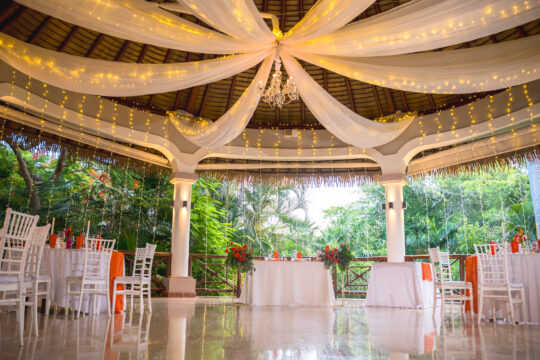
Following vows, guests transition into an open terrace for lively cocktails before moving into a candlelit dinner space.
Ceremony Zone: Peaceful, focused, and immersive
Cocktail Lounge: Dynamic, communicative, and breezy
Reception Dining: Warm, candlelit, and feast-focused
Late-Night Dance Floor: High-energy and immersive
This intentional spatial separation gives every phase of your wedding day its own distinct tempo.
Furthermore, it prevents guests from feeling confined to a single footprint for six straight hours.
Evaluating Distance and Accessibility Realities
While sprawling grounds offer captivating visual variety, physical distance must be managed carefully.
Extensive walks between sites can prove challenging for elderly family members, young children, or guests wearing formal heels.
Therefore, ask venue managers about practical transit routes between areas rather than assuming access is seamless.
Transition Space Venue Evaluation Checklist
Venue Area
Critical Factors to Check
Operational Solution
Beach to Lawn Pathway
Sand depth, shoe friendliness, and incline
Wooden duckboarding or firm gravel fill
Nighttime Walkways
Visibility, step lighting, and dark corners
Low-voltage pathway lanterns or string lighting
Weather Access
Rain contingency paths and covered breezeways
Umbrellas or permanent covered architectural walkways
Mobility Accessibility
Stairs vs. smooth ramps for guests
Alternative flat routes and golf cart support
Using Ambient Lighting to Guide Nighttime Journeys
When your celebration continues past sunset across outdoor grounds, lighting along transition paths takes on supreme importance.
Strategic illumination guides guest movement while maintaining the magical aesthetic of your event.
You do not need harsh floodlights to ensure safety along paths.
In fact, low-lying hurricane candles, warm string lighting, and soft uplighting on surrounding palm trees create clear direction without ruining the evening mood.
In short, thoughtful lighting turns simple midnight walks between the bar and dance floor into enchanting moments.
Reimagining Pathways as Interactive Guest Lounges
Transition areas do not have to serve strictly as thoroughfares for foot traffic.
With minimal seating, these spaces transform into secondary gathering spots where guests recharge, enjoy a drink, or engage in quiet conversation away from the loud speakers.
Add small bench seating along garden walkways
Place a water or cocktail refreshment station along the trail from the ceremony
Create a cozy lounge nook under a canopy of trees between the dining area and dance floor
In vast Riviera Maya venues, these secondary spaces become favorite spots for guests seeking intimate connection.
Essential Questions to Ask During Your Venue Walkthrough
During your physical venue walkthrough, look beyond the main photo backdrops and analyze operational flow:
How do guests arrive at the ceremony space from the entrance?
Where do guests gather immediately following the vow exchange?
What is the exact walking distance between cocktail grounds and dinner tables?
Are pathways smoothly paved, gravel-lined, or set in soft sand?
Is there adequate shade along transition paths during afternoon hours?
How are pathways illuminated once dark falls?
What is the backup plan for walking between spaces if tropical rain occurs?
Answering these practical questions early prevents unexpected logistical friction on your wedding day.
Final Thoughts
The true magic of a destination wedding does not happen exclusively at the altar or on the dance floor.
It unfolds while guests arrive, stroll, converse, sip cocktails, and discover new corners of a tropical sanctuary together.
Because of this, transition spaces deserve equal care during venue selection and spatial planning.
A well-conceived layout does not require every square foot to be grand; it simply requires every space to work in harmony.
At Sirenna Stories, we document the raw emotion, natural beauty, and unscripted moments that connect your entire destination wedding story.Contact Sirenna Stories today to explore venue guides and plan editorial photography for your Riviera Maya wedding!
Riviera Maya Mexico
Moments, destinations, and stories that Contact us
Occasional updates featuring real weddings, thoughtful inspiration, and curated moments from destinations we love.
We use cookies to improve your experience on this website. You may choose which types of cookies to allow and change your preferences at any time. Disabling cookies may impact your experience on this website. You can learn more by viewing our Cookie Policy.
 admin
admin 



 Optimized by Seraphinite Accelerator